Inflation Monitor: Goods Take Driver's Seat

The inflation story got a new wrinkle just ahead of the war in Iran. Goods prices became the dominant inflationary force, taking over from services, which had fueled the bulk of price gains for about three years, according to the Personal Consumption Expenditures (PCE) price index, the Federal Reserve's preferred inflation gauge.
As Fed policymakers await the next round of inflation data, starting April 30, they'll be considering more than just the impact of the largest oil-supply disruption in history. In February, before the war started, the price of goods on a three-month annualized basis hit 4.5%, the highest since the inflation spike of 2021–2022, and higher than any rate seen in the five years before that. Durable goods prices soared 8.3% on a three-month annualized basis, which measures what annual inflation would be if prices kept rising at the same rate for a year.
Overall, the price of goods accounted for 57% of the 0.4% month-over-month increase in the headline PCE index in February (the latest PCE data available as of mid-April). Prior to that, services had driven at least 50% of PCE inflation in nearly every month since the end of 2022.
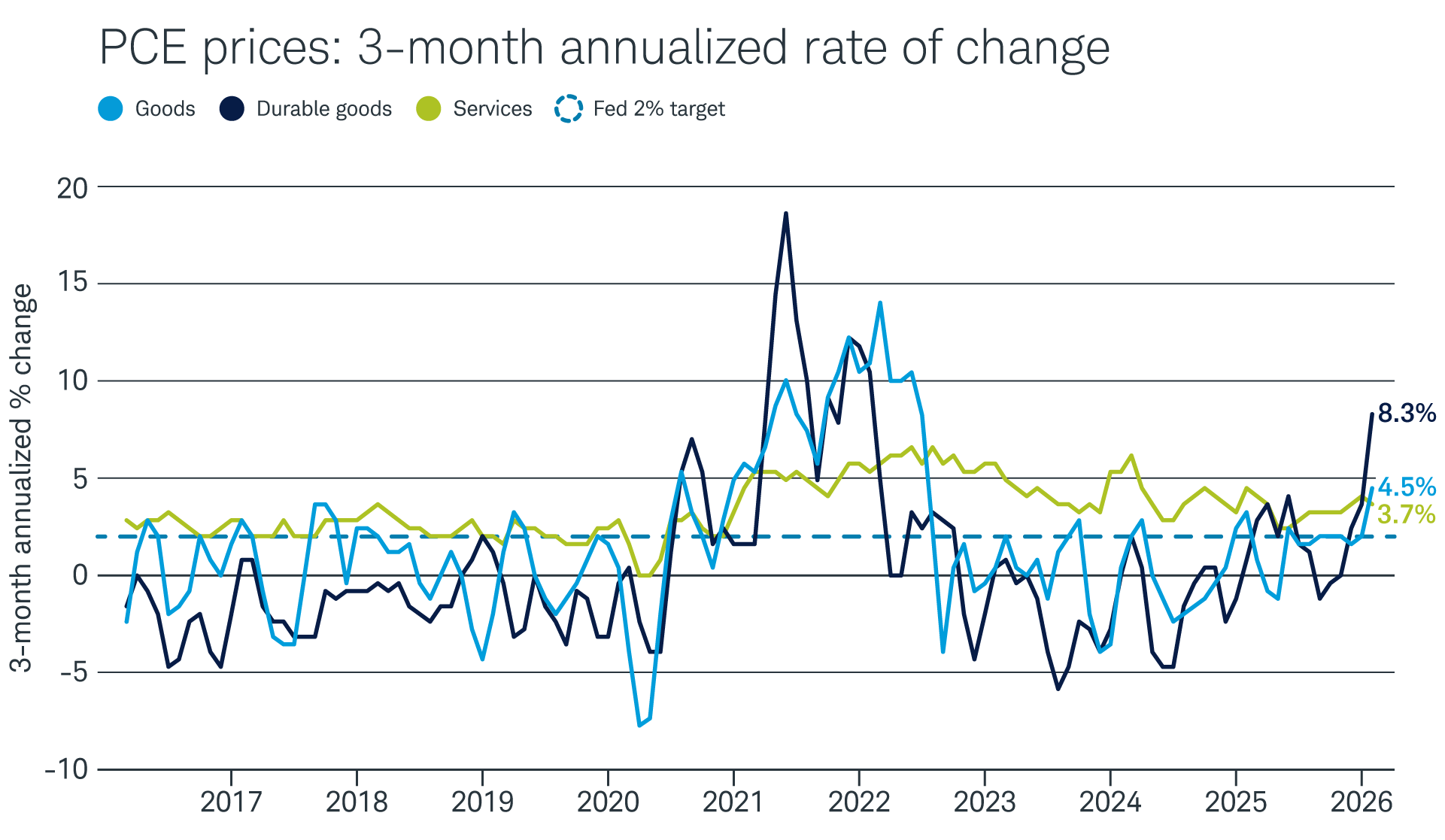
Data source: Bureau of Economic Analysis
Services could quickly overtake goods again. The PCE services "supercore," which excludes energy and housing, has remained above 3% ever since the 2021 inflation spike. In February, it was 3.2%. But at the very least, the resurgence in goods prices, which Fed Chairman Jerome Powell said are tariff-driven, and possibly transitory, comes at a time when services prices remain a persistent concern and elevated prices for oil, natural gas, and other commodities may soon start filtering downstream into a wide range of products and services.
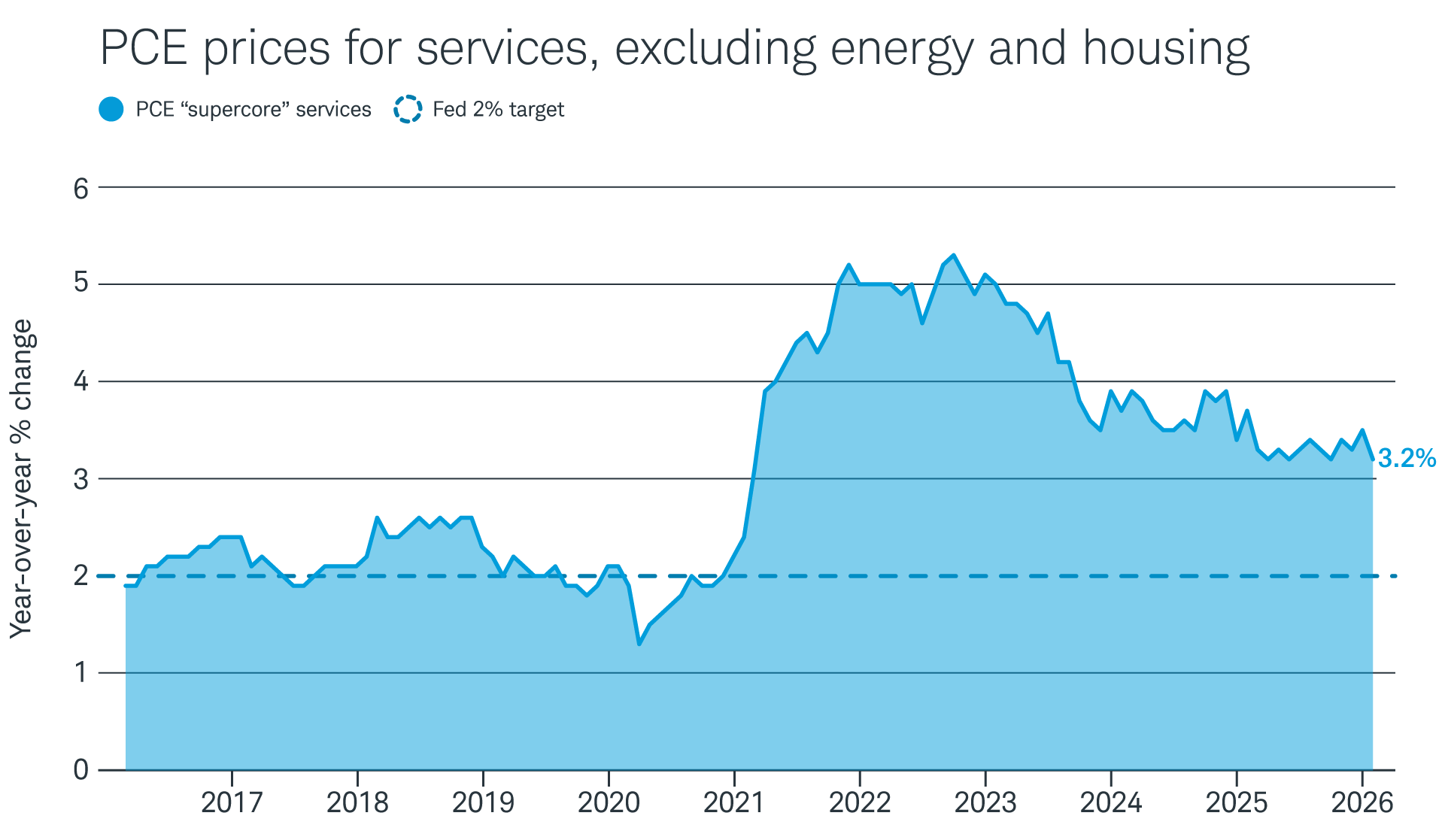
Data source: Bureau of Economic Analysis
Aside from higher gas prices and airline tickets, the oil-supply shock hadn't yet materially affected consumers as of March, the most recent month for which inflation data was available. But the Producer Price Index (PPI) showed that upstream businesses are feeling the pain, whether from tariffs or oil prices, and they may decide to pass it on to consumers.
In fact, the PPI shows that goods prices at the producer level have been trending steadily higher since 2023. In March, prices for intermediate-demand processed goods—two levels up the supply chain from consumer products—jumped 6.6% from a year earlier, the biggest increase since 2022. They rose a still-elevated 5.1% even when excluding food and energy prices.
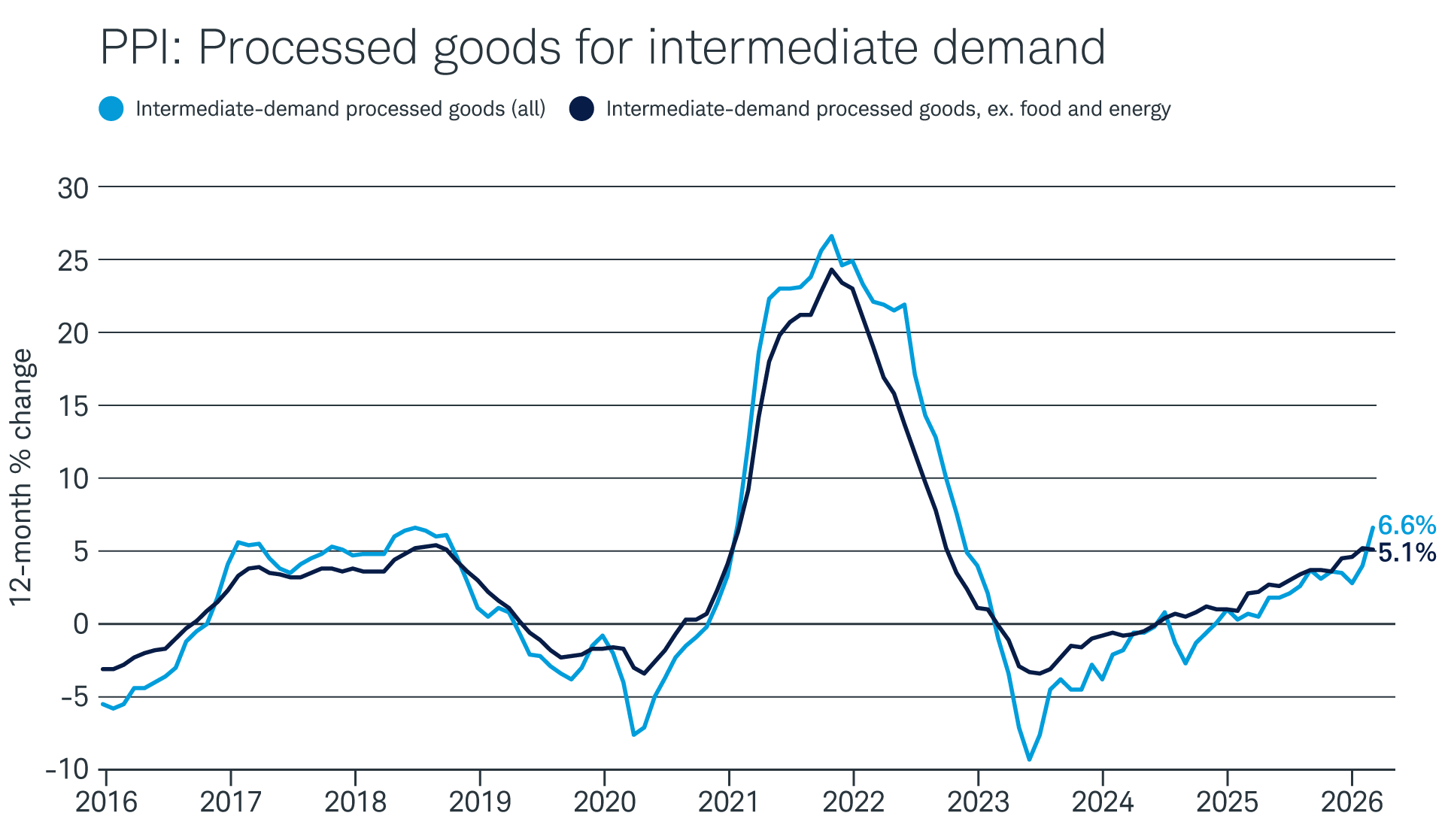
Data source: Bureau of Labor Statistics